Master Casino Games: Your Ultimate Guide to Winning Strategies
A player sits at a blackjack table, hoping their hand totals closer to 21 than the dealer’s. Casino games like this rely on a blend of chance and decision-making, with rules that vary from the spin of a roulette wheel to the draw of a card. The primary benefit is the opportunity to win monetary prizes based on the game’s odds, which are set by the house. To participate, players place bets and follow the specific gameplay instructions for each title at a physical or digital venue.
Understanding the House Edge Across Popular Table Offerings
The house edge is the casino’s mathematical advantage baked into every bet, and understanding it across popular table offerings reveals stark differences in player risk. In blackjack, playing perfect basic strategy can slash the house edge to under 0.5%, making it one of the most player-favorable games. Conversely, American roulette packs a 5.26% edge due to the double zero, while the single-zero European variant nearly halves that to 2.7%. Craps offers a split: the Pass Line bet carries a low 1.41% edge, yet dice side bets can spike above 10%. An apparently simpler game like baccarat hides a surprisingly sharp edge—around 1.06% on the Banker, despite no player decisions. Knowing these numbers lets you choose tables where your bankroll lasts longer.
How Blackjack Strategy Shifts Odds in Your Favor
In blackjack, perfect basic strategy directly shifts the house edge from roughly 2% down to under 0.5%. Optimal play decisions dictate when to hit, stand, split, or double based on your hand versus the dealer’s upcard, eliminating guesswork. This removes the casino’s mathematical advantage from player errors. By consistently following a strategy chart, you convert a negative-expectation game into one where near-optimal decisions dictate the outcome. While card counting offers a further shift, basic strategy alone provides the most accessible and powerful swing in odds.
The Math Behind Roulette Bets and Payout Structures
Roulette payouts are dictated by probability, with every bet reflecting the likelihood of its specific outcome. A straight-up single-number wager pays 35:1 because it hits once in 38 spins on an American wheel, creating a stark house edge of 5.26%. Even-money bets like red or black return 1:1 but lose on two green zeros, preserving that same edge. The true cost lies in the gap between true odds and payout odds—a disparity that makes long-term profit impossible. Inside bets bundle lower probabilities with higher multipliers, while outside bets offer frequent but capped wins, all tied to the wheel’s static 38 spaces (or 37 in Europe).
| Bet Type | Payout | Probability (American Wheel) |
|---|---|---|
| Straight Up | 35:1 | 2.63% |
| Red/Black | 1:1 | 47.37% |
Baccarat’s Low House Advantage and Why Players Return
Baccarat’s primary draw is its exceptionally low house advantage for players, with the Banker bet holding just a 1.06% edge and the Player bet at 1.24%. This thin margin means the casino’s cut is minimal, giving bettors a genuine shot at prolonged sessions and frequent wins. Players return because this statistical fairness strips away complex strategy, replacing it with pure, high-stakes action. There’s no skill ceiling to master—just a coin-flip thrill with favorable odds. Q: Why do players return to baccarat despite its simplicity? A: Because baccarat offers the best mathematical chance to walk away ahead among major table games, turning luck into a near-even contest against the house.
Slot Machines: Volatility, RTP, and Progressive Jackpots
Volatility determines how often and how much a slot pays; low volatility offers frequent small wins, high volatility risks long dry spells for potentially larger payouts. RTP (Return to Player) is the theoretical percentage wagered returned over time—always check 96%+ for better odds. Progressive jackpots pool a fraction of every bet, growing until one spin triggers the full prize, often requiring maximum bet for eligibility. Q: Should I chase a progressive slot? A: Only if you accept its extremely low odds; the RTP often drops without the jackpot, so treat it as entertainment, not an investment. Balance your bankroll: pair high-volatility slots with smaller stakes, and use low-volatility for extended play.
Decoding Paylines and Bonus Feature Mechanics
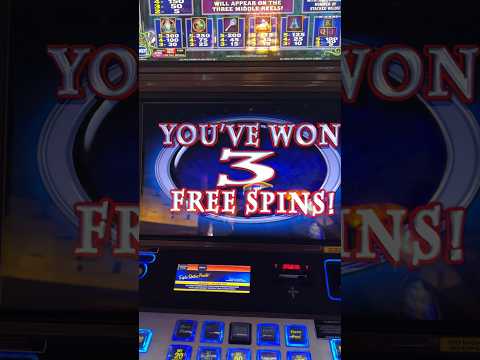
Decoding paylines reveals that modern slots often discard fixed lines for Megaways or cluster-pays mechanics, where thousands of potential winning combinations shift with every spin. Bonus feature mechanics hinge on specific triggers—landing three scatter symbols typically unlocks free spins with multipliers, while cascading reels remove winning symbols to allow consecutive payouts. Understanding these mechanics means knowing that hold-and-spin bonuses lock high-value wilds for respins, and pick-and-click games assign hidden credit values to choices. Always check if bonus rounds retrigger or increase volatility, as this directly impacts your win potential.
Paylines define win patterns; bonus features dictate how and when those wins multiply—master both to optimize gameplay.
High Volatility vs Low Volatility: Choosing Your Spin Style
When selecting your spin style, high volatility slots offer infrequent but substantial payouts, demanding a larger bankroll and patience to survive dry spells. Conversely, low volatility games provide smaller, consistent wins, extending playtime for casual budgets. For risk-tolerant players chasing life-changing hits, high volatility aligns with choosing your spin style for maximum reward potential. Meanwhile, low volatility suits those prioritizing steady returns. Bankroll management is critical: high volatility requires a longer runway; low volatility allows shorter sessions. Q: Which volatility type is better for beginners? A: Low volatility slots, as they reduce financial risk and offer frequent feedback, helping new players understand game mechanics without rapid bankroll depletion.
How Progressive Jackpots Accumulate and Trigger
A progressive jackpot accumulates by diverting a small percentage of each player’s wager on a linked network of machines into a central prize pool. This seed amount grows continuously until a specific triggering condition is met. For standard progressives, the trigger is hitting a precise symbol combination, often the rarest on the reels. Wide-area progressives, however, use a random number generator (RNG) that can award the jackpot at any spin, regardless of the symbols. The trigger mechanisms vary by machine type, with local progressives requiring a minimum bet to qualify and mystery jackpots firing based on a hidden value, not a specific payline.
| Aspect | How It Accumulates | Trigger Method |
| Local Progressive | Wagers from a single casino or bank of slots | Landing a specific symbol combination, often requiring max bet |
| Wide-Area Progressive | Wagers from multiple casinos or a network | RNG selects any spin at random, independent of symbol outcomes |
| Mystery Progressive | Same percentage contribution as standard slots | Hidden threshold value reached; jackpot triggers without payline |
Poker Variants That Challenge Skill Over Luck
When picking casino games that reward smarts, focus on poker variants that minimize blind luck. Texas Hold’em rules, but Omaha and Seven-Card Stud demand sharper hand-reading and discipline, making them top choices for skill-based play. Unlike slots, these games let savvy decisions on betting and folding directly impact your odds against other players, not just the house. Q: Which poker variant gives skilled players the biggest edge? A: Pot-Limit Omaha, because tighter hand selection and complex draws reward strategic patience over random chance. Stick to these for a casino experience where your choices matter most.
Texas Hold’em Strategies for Live and Online Tables
In live Texas Hold’em tables, physical tells and bet sizing patterns provide critical data, requiring tighter preflop ranges from early position. Online play demands aggressive position-based aggression due to faster hand rates and HUD-driven reads. Exploit loose-passive opponents by value-betting thinner, while countering aggressive regulars with check-raises on dry boards. Adjust continuation bet frequencies: 70% on flops that favor your range, lowering to 45% on dynamic turns. Balance bluffs on wet textures, especially in multiway pots, to avoid predictable lines.
Success in Texas Hold’em hinges on adapting bet sizing, position, and range exploitation to the distinct rhythms of live tells versus online statistical profiles.
Three-Card Poker’s Unique Ante and Pair Plus Wagers
Three-Card Poker’s structure departs from traditional poker by offering two independent bets: the Ante and the Pair Plus. The Ante wager pits the player against the dealer’s hand, requiring a strategic decision to fold or raise after seeing your cards. The Pair Plus wager, by contrast, pays out solely on the strength of your own three-card hand—like a pair or better—decoupled from the dealer’s outcome. This dual-bet system allows players to balance a head-to-head challenge with a side bet that rewards pure hand equity, adding distinct tactical layers to each round.
Three-Card Poker’s Ante forces player-versus-dealer play, while the Pair Plus wager pays on hand strength alone, creating a bifurcated risk profile within a single game round.
Video Poker’s Return-to-Player Potential with Optimal Play
Video Poker stands apart in the casino by offering a uniquely high Return-to-Player potential with optimal play, often exceeding 99.5% on machines like Jacks or Better. Unlike slot machines, where outcomes are purely random, Video Poker’s paytable and draw decisions directly influence your odds. By memorizing basic strategy—knowing exactly which cards to hold in every hand—you can slash the house edge to near zero. This transforms each dealt pair or four-card flush into a calculated opportunity, rewarding disciplined decision-making over guesswork. It is the rare casino game where sharp, consistent play can practically eliminate the casino’s long-term advantage.
Dice Games and Their Rapid Action Appeal
Dice games deliver an unmatched rapid action appeal in casino environments because each roll resolves in seconds, eliminating the drawn-out decisions of card games. This instant outcome creates a continuous adrenaline loop, where players place new bets moments after a result lands. The physical act of throwing dice adds a tactile, visceral thrill that digital slots lack, while the simplicity of predicting numbers or combinations keeps focus purely on the roll’s speed. Unlike table games that pause for dealer actions or player strategy, dice sustain a relentless pace, maximizing rounds per hour and feeding the casino floor’s energy. For players seeking quick, decisive thrills without complex rules, the immediate feedback of a bouncing cube is the core appeal.
Craps Pass Line and Come Bets for Beginners
For beginners, the Craps Pass Line and Come Bets for Beginners form the safest entry point. The Pass Line bet wins immediately on the come-out roll if a 7 or 11 appears, and loses on 2, 3, or 12. If any other number (4, 5, 6, 8, 9, or 10) becomes the Point, you win only if that Point repeats before a 7. The Come bet works identically, but is placed after the Point is established, using the next roll as its own come-out. Follow this clear sequence:
- Place chips in the Pass Line before the shooter’s first roll.
- After a Point is set, place a Come bet on the next roll.
- Back both bets with free odds if available, reducing the house edge to near zero.
These bets offer simple rules and low house advantage, perfect for newcomers learning the rapid-action flow.
Understanding the Odds in Side Wagers Like Hard Ways
Understanding the odds in side wagers like Hard Ways requires recognizing their significantly higher house edge compared to main craps bets. A Hard Way bet wins only if the chosen number (4, 6, 8, or 10) rolls as a double before a seven or an easy combination. For instance, a Hard 10 pays 7:1, but the true odds are 8:1, giving the house a 9.09% advantage. This skew makes them a high-risk proposition where the rapid action of dice games can tempt players into chasing larger payouts. They are fundamentally sucker bets for the uninformed, as the frequency of sevens statistically erodes long-term value.
- A Hard 4 or 10 offers a 7:1 payout against true odds of 8:1, creating an 11.1% house edge.
- A Hard 6 or 8 pays 9:1, but true odds are 10:1, yielding a 9.09% house advantage.
- The dice must land as a precise pair (e.g., 2-2 for Hard 4), making them the most unlikely outcomes in craps.
- Knowing that a seven appears every six rolls on average explains why sevens destroy Hard Way bets more often than any other losing roll.

Live Dealer Experiences and Real-Time Interaction
Live dealer games bridge the gap between online play and a real casino floor by streaming a human croupier directly to your screen. You can watch the dealer shuffle cards or spin the roulette wheel in real-time, while a chat box lets you interact with them and fellow players. This immediacy makes each hand or spin feel personal and spontaneous. A common question is: “Can the dealer actually see my messages?” Yes, they can read the chat, often calling you by name to reply to your jokes or congratulate your win, which turns a solitary game into a shared, engaging experience.

How Streaming Technology Replicates the Floor Atmosphere
Streaming technology replicates the floor atmosphere by deploying multiple high-definition camera angles that capture subtle dealer movements and table textures, creating a spatial depth cd33 akin to a physical casino. Immersive audio processing isolates ambient sounds—chip shuffles, dealer announcements—and spatially renders them to match visual cues, reinforcing the illusion of presence. This synchronization of visual and auditory data must remain sub-50ms to prevent a distracting lag that breaks the floor mimicry.
Q: How does streaming tech mimic the physical casino’s energy without a crowd?
A: It uses real-time background audio loops of crowd murmurs and slot sounds, dynamically mixed to reflect when players hit wins, replicating the unpredictable sonic texture of a live floor.
Betting Etiquette in a Virtual Dealer Setting
In a virtual dealer setting, betting etiquette hinges on respecting the pace. The dealer controls the betting timer, so avoid last-second wager changes or “table talk” that delays the hand. Use the chat feature for small talk, not for complaining about losses. Remember that your seat is shared—don’t hog the table by taking excessive time on side bets or strategy decisions. Acknowledging a runner’s luck or a dealer’s friendly greeting keeps the energy positive. The golden rule is respect the real-time flow; treat the digital felt with the same courtesy as a physical casino, and you’ll enhance everyone’s live experience.
| Do | Don’t |
|---|---|
| Place standard bets within timer limits | Request dealer to wait for your “next hand” |
| Use emoji reactions for quick interaction | Spam chat with irrelevant personal stories |
| Accept losses with a brief “nice hand” | Blame the dealer for virtual card outcomes |
Card Counting and Betting Systems Explained
Card counting in blackjack is a strategy where players track the ratio of high to low cards remaining in the deck, adjusting bets accordingly. When the count favors high cards, the player increases their bet to capitalize on a higher probability of blackjack or dealer busts. Betting systems like the Martingale or Paroli are separate from counting; they manage wager sizes based on wins or losses, but do not alter the game’s mathematical edge. Card counting offers a theoretical player advantage, whereas betting systems alone cannot overcome the house edge. A common question: Can card counting be used in other casino games? It is primarily effective in blackjack, as games like roulette or slots have independent outcomes not affected by previous results.
Why Hi-Lo Counting Works in Blackjack
The Hi-Lo system works because it effectively tracks the shifting ratio of high to low cards remaining in the shoe. By assigning +1 to low cards (2-6) and -1 to high cards (10-Ace), with 7-9 as zero, the running count directly measures deck favorability. A positive count signals an excess of tens and aces, which increases the player’s chance of a blackjack and dealer bust probability. This correlation allows you to bet more when the odds shift in your favor and reduce bets when the deck is rich in low cards.
- High cards benefit the player more than the dealer, making positive counts actionable.
- The simple +1/-1 system is easy to maintain accurately over multiple decks.
- It turns the dealer’s fixed house edge into a fluctuating, exploitable advantage.
- True count conversion (dividing by remaining decks) refines betting precision.
The Martingale and Fibonacci: Risk and Reward Patterns
The Martingale system doubles your bet after every loss, aiming to recover all previous losses with a single win. This creates a steep risk curve—a long losing streak can wipe out your bankroll quickly. In contrast, the Fibonacci sequence follows a gentler progression, increasing bets according to the famous number pattern (1,1,2,3,5…). This reduces immediate exposure but still compounds during extended downswings. Both systems assume infinite funds and no table limits, which makes them high-risk bankroll strategies in practice. Remember that no progression can change the house edge over time.
- Martingale doubles bets; Fibonacci follows a numerical sequence.
- Martingale needs a single win to recover; Fibonacci requires multiple wins.
- Both risk rapid losses during a losing streak.
Mobile Gaming Trends Shaping Digital Wagering
Mobile gaming trends are redefining digital wagering by prioritizing instant, tactile interaction with casino games. Touch-based swipe mechanics let players spin slots or deal blackjack with a finger flick, mimicking physical casino motions. Haptic feedback vibrates on wins or near-misses, heightening engagement. Short, high-frequency sessions capitalize on mobile’s on-the-go nature, with bite-sized rounds of baccarat or video poker completing in under 30 seconds. Compact UI design adapts complex tables to portrait screens, stripping unnecessary elements to keep focus on bets and payouts.
Instant gameplay loops and sensory feedback turn every mobile tap into a deliberate wager, making casino games feel reactive and personal.
This shift eliminates waiting—transactions process immediately, and autoplay features let users set loss limits before hands or spins execute, blending convenience with controlled risk.
Touchscreen Adaptations for Classic Card and Wheel Games
Touchscreen adaptations for classic card and wheel games prioritize intuitive gesture control, letting players swipe to deal cards or spin a roulette wheel with a flick. These digital interfaces replace physical mechanics with tactile touch feedback, where long-presses adjust bet sizes and pinch-to-zoom reveals game details. For blackjack, a double-tap signals a hit, while a downward swipe indicates stand. Roulette wheels now include haptic resistance, mimicking a physical ball’s deceleration. Q: How does a touchscreen replicate a roulette wheel’s randomness? A: Through a certified RNG, but the screen’s spin animation uses velocity-based gestures to simulate momentum, with a subtle vibration as the ball settles. Every interaction is optimized for one-handed, fluid play.
Push Notifications and Gamified Loyalty Programs
Push notifications act as direct, personalized triggers, instantly alerting players to new challenges or bonus spin opportunities within a casino game’s ecosystem. These alerts are the entry point to gamified loyalty programs, where streaks and mission completions unlock tangible rewards, transforming passive wagering into an active progression loop. By combining time-sensitive prompts with a visible tier system, these tools drive consistent engagement and repeat sessions. The entire experience revolves around gamified wagering rewards, making each notification a compelling call to advance through the loyalty ladder for exclusive perks.
Jackpot Structures: Fixed vs Progressive Payouts
The old-timer at the bar pulled a worn coin from his pocket, explaining why he only plays the fixed jackpot machines. “A fixed jackpot,” he said, “is a known number, like this twenty-dollar chip—you see it, you chase it, and it hits when the game decides.” He pointed to a glowing progressive screen. “That one’s a phantom, growing with every player’s bet across half the casino. You’re betting on a dream, not a number.” I asked him, “So which pays more in the long run?” He grinned. “The fixed pays smaller, but you walk away with something. The progressive pays once in a blue moon, but when it does, you walk away rich.” He tapped the machine. “Your call: a steady hand or a lottery ticket.”
Daily Drop Jackpots and Their Timed Triggers
Daily Drop Jackpots introduce a fixed deadline to your play, triggering a guaranteed payout at a specific time or when a predetermined total is reached. Unlike progressive systems that grow indefinitely, these jackpots reset daily, creating urgency. The timed trigger employs a guaranteed daily jackpot release that activates regardless of wager size. To capitalize, follow this sequence:
- Check the game’s timer for the exact daily reset or trigger window.
- Place bets within the active period to qualify for the timed pool.
- Monitor the meter—once it hits the target value, the jackpot drops for a random active player.
Mega Jackpot Networks Linked Across Platforms
Mega Jackpot Networks Linked Across Platforms aggregate bets from multiple online casinos into a single progressive pool, creating significantly larger top prizes than isolated machines. This cross-platform structure synchronizes the jackpot in real-time, meaning a player on one site can trigger the prize funded by all connected networks. However, the odds of hitting such a pool decrease proportionally as the player base expands, making statistical return less predictable than fixed jackpots. Q: How do cross-platform networks affect your chance of winning? A: While the base game RTP remains constant, the jackpot probability is diluted across thousands of simultaneous players, requiring longer play sessions for a realistic shot at the top tier. The prize escalates faster but should be viewed as a lottery-style bonus rather than a reliable payout structure.
Bankroll Management for Consistent Play
Effective bankroll management for consistent casino play begins with setting a strict, session-specific loss limit and never exceeding it. You must divide your total funds into smaller units, betting only a fixed percentage (e.g., 1–2%) per round to absorb variance. This discipline prevents chasing losses, the single fastest path to ruin. Track every wager to maintain clarity on your current standing, ensuring emotional decisions never override your pre-planned strategy. Consistency in this approach does not guarantee wins, but it guarantees play time and control over how your bankroll is spent. Treat your bankroll as a finite resource for entertainment, not a fund to be exhausted on a single desperate wager.
Setting Session Limits Without Chasing Losses
Setting session limits means defining a strict time or loss cap before you sit down, and sticking to it no matter what. When you hit that boundary, the session is over—no exceptions. This approach prevents the dangerous spiral of chasing losses, where emotions override logic and erode your entire bankroll. Predefined session limits act as a psychological anchor, helping you walk away even when the game feels “due.” Treat each session as a discrete event with its own stop-loss, not a mission to recover what’s gone. The discipline of honoring your cap separates controlled play from reckless desperation.
Set a firm session cap before playing; once reached, walk away immediately to avoid chasing losses.
Unit Betting Systems to Extend Playing Time
Unit betting systems stretch your bankroll by standardizing wagers, turning volatile casino game sessions into a managed experience. A flat-betting approach, using identical units per round, is the most direct way to extend playing time with unit betting because it avoids catastrophic losses. Progressive systems like the Martingale or Paroli can accelerate depletion if unlucky streaks hit, while negative progression increases risk on purpose. The golden rule is setting a fixed unit size based on your total bankroll, generally 1% to 5%, and never deviating.
| System | Risk to Time Extension | Best Use |
|---|---|---|
| Flat Betting | Low – stable, predictable | Beginners, risk-averse play |
| Martingale | High – rapid ruin during long loss runs | Short sessions only |
| Paroli | Medium – leverages wins, caps losses | Even-money bets |
Game Show-Inspired Experiences in Digital Casinos
Game show-inspired experiences in digital casinos bridge classic game show mechanics with casino wagering. These games, like “Dream Catcher” or “Monopoly Live,” replace traditional reels with a live host spinning a wheel or calling out segments. Players bet on numbered outcomes or bonus rounds, merging RNG-free physics with real-time decision-making. A practical question: How does skill affect outcomes in game show-inspired casino games? Answer: Minimal skill; they rely on probability for winning segments, but strategic bet placement on lower-risk numbers can extend playtime. Focus on the bonus rounds, which often offer the highest payout multipliers but lower hit frequency.
Wheel of Fortune and Spin-to-Win Formats
Wheel of Fortune and spin-to-win formats replicate the iconic TV game show by presenting a segmented wheel that players spin to land on cash prizes, multipliers, or bonus rounds. Unlike traditional slots, these games often remove the reels entirely, focusing the interaction on the spin-to-win mechanic that determines outcomes through a single decisive rotation. Players typically place a bet before each spin, with segments displaying exact values or chances to advance to a pick-a-box feature. The visual suspense of the wheel slowing down is a core user experience. Some iterations include multiple wheels for cascading multipliers.
Q: Can Wheel of Fortune games award fixed jackpots?
A: Yes, many spin-to-win formats feature a progressive or fixed jackpot segment on the wheel, which is only claimable if the pointer stops on that exact slice.
Interactive Decision Points in Live Hosted Shows
In live hosted shows, interactive decision points transform passive viewing into active gameplay. Players select from timed options like bonus rounds, multipliers, or risk/reward paths, directly influencing outcomes. These choices, often presented via on-screen overlays or voting mechanics, require quick analysis of odds. The host responds dynamically, adjusting the narrative based on collective or individual selections. This creates real-time player agency within a structured game framework, enhancing engagement without removing the house edge.
Interactive decision points in live hosted shows let players steer outcomes through timed, strategic choices, merging host-led entertainment with personal control.
How Different Types of Gambling Entertainment Actually Work
Understanding Slot Machines and Video Reels
Table Games: Rules for Blackjack, Roulette, and Baccarat
Live Dealer Experiences vs. Automated Digital Play
Key Features That Determine Your Gaming Experience
Return-to-Player Percentages and What They Mean for Your Wallet
Volatility Levels: How Often You Win vs. How Much You Win
Bonus Rounds, Free Spins, and Special Game Mechanics
How to Choose the Right Game for Your Playing Style